
Why Audiometric Testing in Australia Needs to Be Paired with Real Noise Assessments — Not Just Compliance

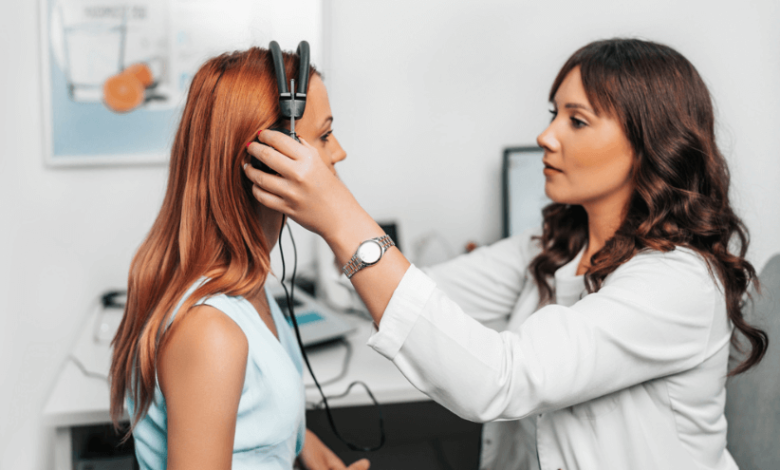
Audiometric evaluation is often regarded as a compliance audiometric test of hearing for Australian employers simply to check off a requirement under hearing regulations. However, compliance with regulations is a narrow-minded method of addressing the issue that could leave businesses open to long-term health liabilities, legal risk, and preventable harm to workers.
Here’s the main concern: audiometric evaluation is only one component of the hearing conservation program. In the absence of a comprehensive, targeted site-specific noise evaluation, there is a missed opportunity to truly grasp and address hearing conservation challenges.
We need to change the story — audiometric evaluation is not only a screening test; it should initiate comprehensive investigations and risk management across all worksites, including construction and mining, food processing, and logistics.
Hearing Loss in Australia: A Workplace Issue in Disguise
In the Australian setting, hearing loss is one of the underreported but preventable occupational health issues. Many businesses still function based on very limited appreciation of what their workers are actually exposed to, even in the wake of the Model WHS Regulations and Safe Work Australia’s Managing Noise and Preventing Hearing Loss at Work Code of Practice.
Regular audiometric testing, which is typically performed on an annual or biennial basis, can indicate whether a worker’s hearing is worsening over time. However, without concurrent noise exposure evaluations, there is no context to answer important questions: What tasks or pieces of equipment are responsible for noise exposure? Are controls, such as earmuffs or enclosures, effective? Is exposure dependent on location or shift?
This gap is what leads to reactive management — or, even worse, the misplaced belief that clear-cut compliance translates to safety.
What Most Testing Programs Lack: A Comprehensive Environmental Perspective
An audiometric testing program in Australia is enabled by precise, on-site noise assessments. These assessments must include:
Monitoring over- and under-shift noise exposure, including continuous and peak levels, for the entire duration of the shift.
Task-based exposure to noise for discrete, well-defined tasks (e.g., welding, grinding, and loading).
Noise mapping of specific equipment.
Cumulative noise exposure as a result of reverberation and reflection within shared environments.
As a rule of thumb, companies should not rely on outdated baseline assessments, noise information from equipment manuals, or generic risk ratings in their SWMS. These methods fail to provide the granular detail necessary to illuminate the why behind the what concerning changes in results from audiometric testing.
See also: Pond Drum Pollutants The Definitive result to Crystal Clear Pond Water
The Strategic Role of Noise Assessment in Hearing Conservation
Noise assessments play a dual role in the workplace. To occupational hygienists, such assessments might seem purely technical. In reality, they serve as strategic decision-making tools. When paired with audiometric testing, they enable businesses to:
Determine “hot spots” where hearing protection is either not properly utilized or used inadequately.
Assess the real effectiveness of engineering controls, such as barriers or insulation.
Prioritize where to invest in quieter machinery.
Make evidence-based justification for changes to procedures or personal protective equipment (PPE).
Assess progress in hearing conservation programs to ensure that exposure reduction is being tracked over time.
When businesses treat noise assessment as part of an integrated health and safety strategy instead of a one-off compliance activity, they improve resource allocation, enhance worker engagement, and demonstrate due diligence.
The Game is Changing. If You Use It
Adoption of digital technologies for noise management is still limited in Australia. However, noise dosimeters that offer real-time telemetry and personal exposure logging and visual heat maps are affordable.
Lack of access is not the problem. Outdated measurement tools or infrequent hiring of consultants is still commonplace. Wearable noise sensors that integrate into WHS dashboards are a step in the right direction. These sensors enable HSE managers to compare audiometric testing data with actual daily exposure data across roles, shifts, and even seasons.
By leveraging data, hearing risks can be identified more quickly, and interaction with employees is much more effective, as most workers ignore hearing protection advice unless it’s tailored specifically to them and explained in detail.
Legal Exposure is Rising — and Reputational Risk is also on The Rise
Australian WHS legislation requires that risks to hearing must be eliminated or minimized, “so far as is reasonably practicable.” This phrase not only implies conducting a hearing test, but also understanding its underlying factors and showing control over the process.
Businesses that lack a comprehensive or up-to-date noise assessment program that accompanies audiometric testing are exposed. In cases of noise-induced hearing loss (NIHL) and in the absence of recent environmental data, the burden of proving that adequate controls were in place, becomes difficult — even with regular hearing assessments and testing.
This is not just a legal concern. It has to do with a company’s reputation. The expectation of workers is that employers are meant to protect them, not just test them. Employers are becoming more vigilant to passive compliance and are demanding proof of proactive compliance to risk reduction strategies.
Conclusion: Prevention Without Evaluation is Like Oversight Without Change
Hearing tests alone will not avert hearing loss. In fact, hearing tests will merely indicate the damage done. Without regular and thorough noise assessment coupled with hearing tests, businesses will remain oblivious to the daily risks their employees are exposed to.
The Australian ESG and WHS frameworks increasingly stress clear reporting and documenting of workforce interactions, operations, and their health and safety. Here lies the best chance to go beyond compliance and adopt a more thoughtful, unifying approach that combines noise assessment and audiometric testing to elevate safety and health.
For businesses that truly prioritize hearing safety, the question is not, are the tests being done, but what are the insights being gathered and what are the changes being made?